ISO 15138 is an international standard that specifies the requirements and guidelines for the design, testing, installation, and commissioning of heating, ventilation, air-conditioning (HVAC), and pressurization systems used in offshore production installations for the oil and gas industry.
It ensures that offshore HVAC systems operate safely, efficiently, and in compliance with environmental and regulatory expectations.
1. Ensures Safety and a Suitable Working Environment
Offshore environments are highly challenging, with extreme weather conditions, confined spaces, and potential exposure to hazardous gases.
ISO 15138 helps organizations design and operate HVAC systems that maintain safe air pressure, temperature, ventilation, and fire protection, thereby protecting personnel health and minimizing safety risks.
2. Ensures Regulatory and Technical Compliance
This standard provides clear technical specifications to ensure that HVAC systems used in offshore installations meet required performance and safety standards.
In many cases, ISO 15138 compliance supports adherence to national and international offshore regulations, including maritime codes, class rules, and IMO/MODU requirements.
3. Improves Reliability and Maintenance Efficiency
By applying standardized design and installation practices, organizations can achieve consistent quality, easier maintenance, and more reliable system performance.
ISO 15138 also facilitates preventive maintenance, reduces unplanned downtime, and extends the service life of equipment — saving operational costs in the long run.
4. Builds Technical Credibility and Client Confidence
Adopting ISO 15138 demonstrates your organization’s commitment to engineering excellence, safety, and quality assurance.
This enhances your reputation with clients, regulators, and project partners — a key advantage in the competitive offshore oil and gas sector.
5. Promotes Design Consistency and System Integration
ISO 15138 establishes a unified technical reference for all stakeholders — from engineers to contractors — covering ductwork design, flange dimensions, air distribution, and system pressurization requirements.
This consistency minimizes design errors, improves interoperability, and ensures smooth integration between various systems and disciplines.
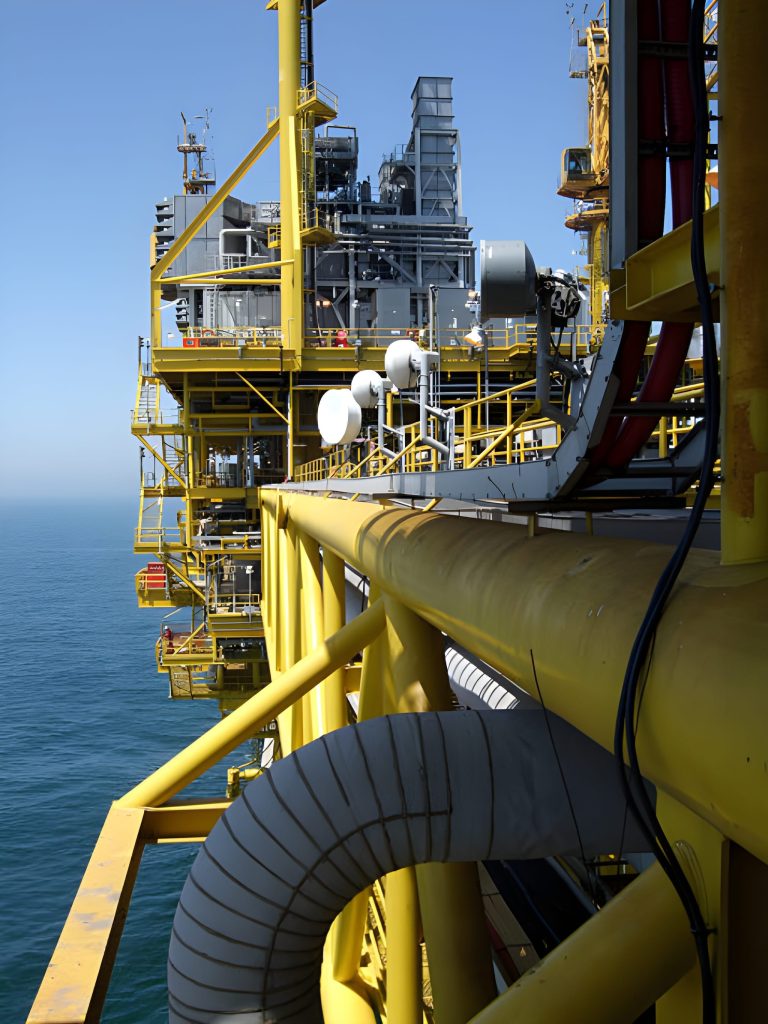
Achieving ISO 15138 certification demonstrates that your organization designs, installs, and maintains HVAC and pressurization systems for offshore facilities in full compliance with international best practices.
It’s more than just a technical standard — it’s a powerful tool to enhance safety, credibility, and operational excellence in the oil and gas sector.
1. Enhanced Safety and Environmental Protection
ISO 15138 places strong emphasis on safe air circulation, temperature control, and pressurization in offshore environments.
Certified systems help prevent hazardous gas accumulation, reduce fire and explosion risks, and ensure a healthy and safe working atmosphere for offshore personnel.
2. Compliance with International Standards and Regulations
Certification proves that your organization meets global regulatory requirements for offshore installations.
Many clients, governments, and classification societies recognize ISO 15138 as a benchmark for compliance with maritime, MODU, and safety regulations.
3. Increased Market Competitiveness
Holding ISO 15138 certification gives your company a competitive edge when bidding for engineering, procurement, or construction contracts in the oil and gas industry.
It signals to clients and partners that your company operates with reliability, consistency, and technical integrity.
4. Improved System Reliability and Operational Efficiency
Certified HVAC and pressurization systems are designed and maintained under strict quality controls, reducing equipment downtime, maintenance costs, and operational disruptions.
This ensures continuous system performance, even under extreme offshore conditions.
5. Stronger Client and Stakeholder Confidence
ISO 15138 certification demonstrates your organization’s commitment to safety, quality, and regulatory compliance.
It builds trust with regulators, clients, and business partners — strengthening your reputation and long-term partnerships.
6. Streamlined Documentation and Standardized Processes
The certification process encourages better documentation management, traceability, and procedural consistency.
This structured approach simplifies audits, inspections, and future upgrades to your HVAC systems.
7. Foundation for Continuous Improvement
ISO 15138 promotes a culture of continuous improvement by establishing clear performance benchmarks and monitoring mechanisms.
This helps your team identify gaps, implement corrective actions, and achieve sustained technical excellence.
✅ In summary, ISO 15138 certification helps offshore and engineering companies:
Protect human life and the environment
Ensure compliance with global offshore standards
Gain client confidence and business opportunities
Optimize system performance and reliability
Step 1
Complete a Quote Request Form so we can understand you and your business. We will then use this to personally prepare a proposal for your certification and define what is known as your ‘scope of assessment’.
Step 2
We will then contact you to book your assessment with an NQA assessor. It consists of two mandatory visits that form the Initial Certification Audit. Please note that you must be able to demonstrate that your management system has been operational for a minimum of three months and has been subject to a management review and a full cycle of internal audits.
Step 3
Following a successful stage two audit, a decision is made. If positive, your certification will be issued by NQA, with both a hard and soft copy of the certificate awarded. Certification is valid for three years and maintained through surveillance audits (years one and two) and a recertification audit in year three.